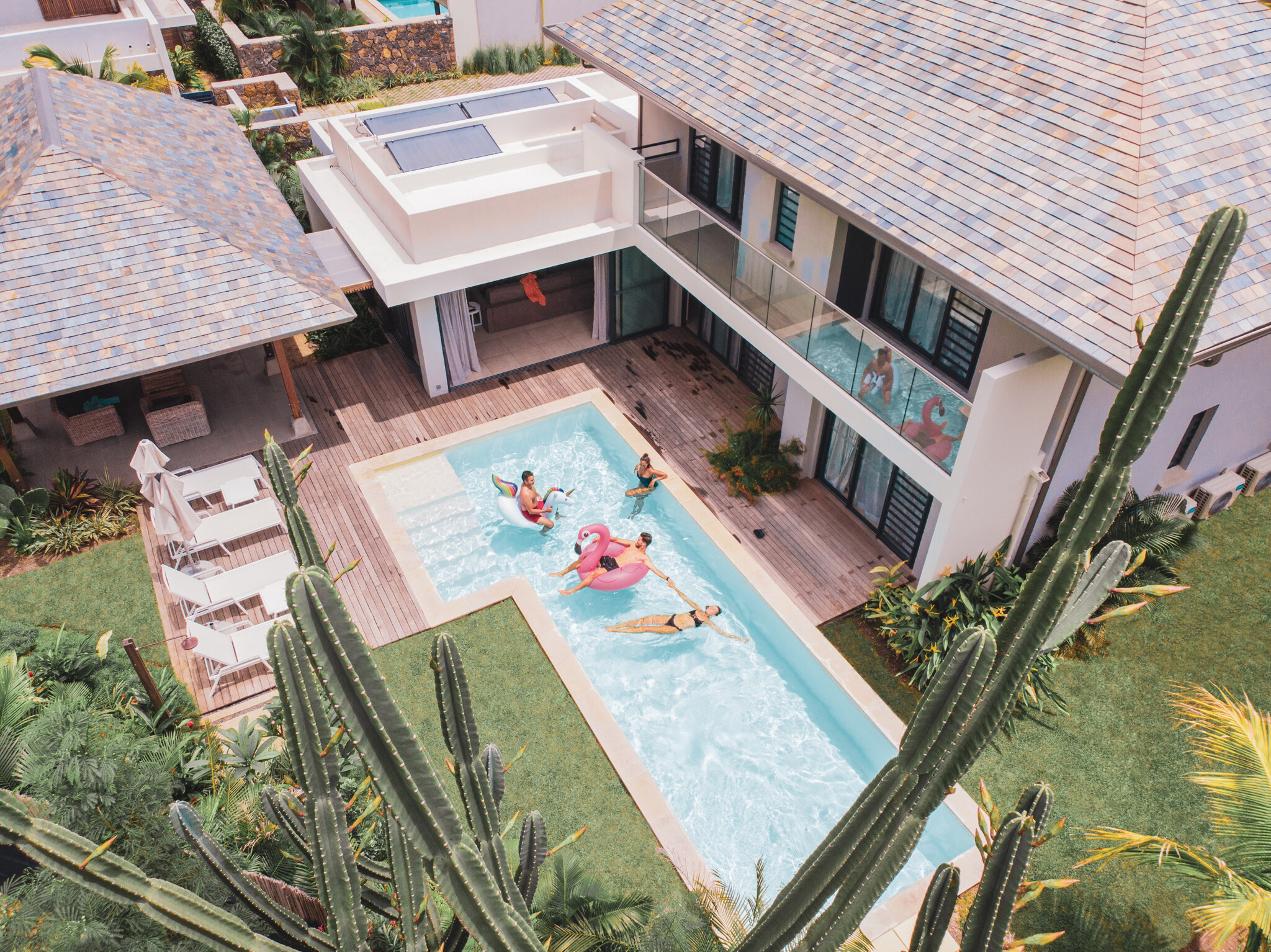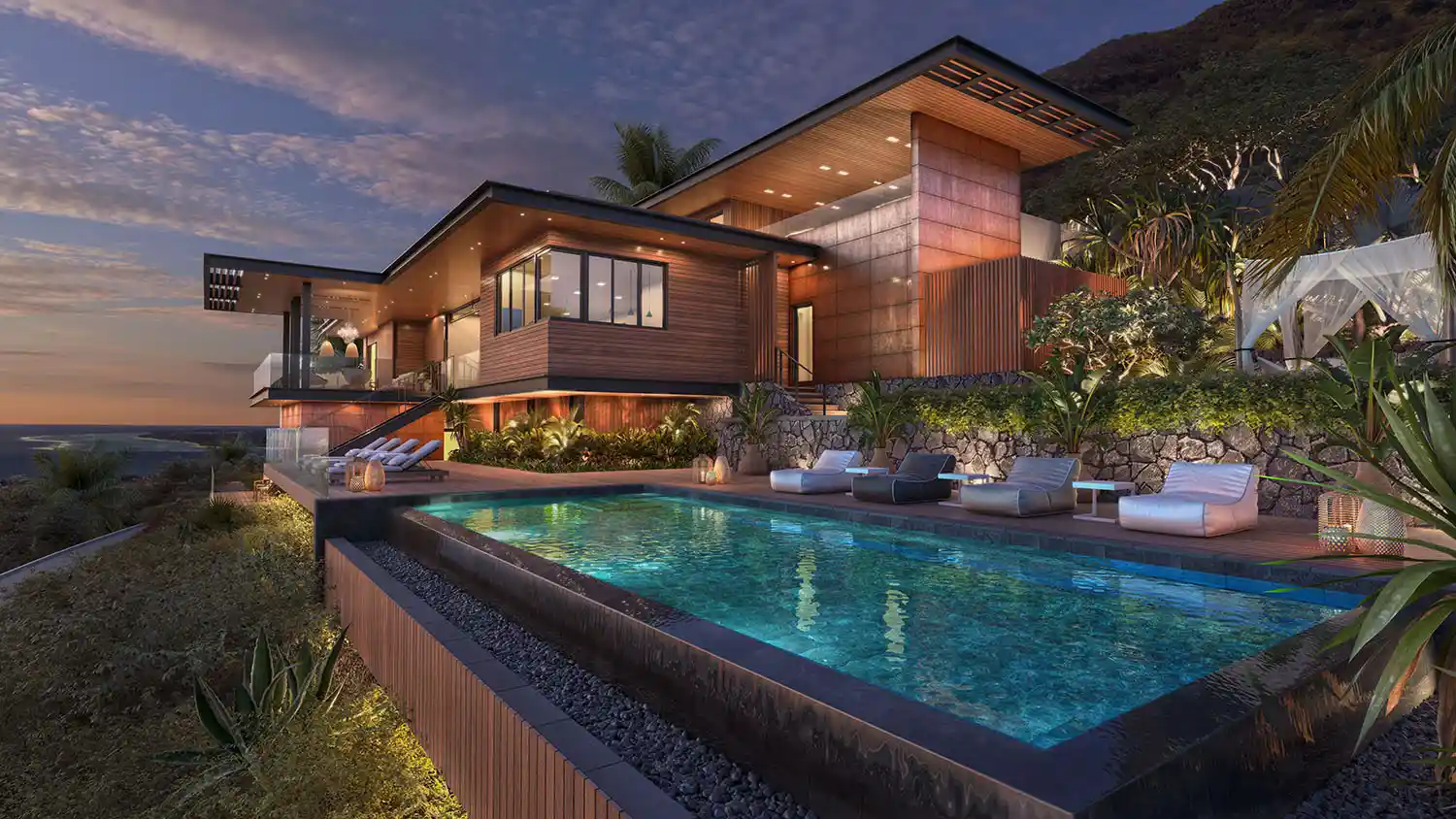

The Mauritius real estate market is heading into 2027 with strong momentum, driven by the arrival of European expats, attractive taxation and new developments open to foreign buyers.
At MJ Développement Mauritius, we support new French families every month with their purchase and relocation plans. Here are the key trends, benchmark prices, schemes to know and areas to focus on to approach 2027 with confidence.
At a glance
| Key facts | In short |
|---|---|
| Market | Dynamic, driven by expat demand and Smart Cities |
| Residency threshold | Purchase of at least USD 375,000 in an approved scheme (rule in force in 2026) |
| Schemes | PDS, Smart City, Ground+2 (IRS and RES on resale) |
| Taxation | Progressive income tax, no French-style annual property tax, no wealth tax, no inheritance tax |
| Key areas | North, west coast, Smart Cities |
Key trends in the Mauritian market ahead of 2027
Real estate in Mauritius follows a long-term trend that began more than a decade ago: steady price growth in high-end new builds, sustained European demand and the rise of developments with integrated services. The number of residence permits obtained through property purchases confirms foreign buyers’ interest, led by French and South African buyers.
On the supply side, the country keeps broadening its schemes to cover every investor profile.
Large PDS (Property Development Scheme) and Smart City developments continue to grow, mainly on the north coast, in the west and in the centre. At the same time, the Ground+2 scheme allows foreigners to buy an apartment in a building with at least two floors above ground level, from MUR 6 million, opening the market to mid-range budgets.
A favourable backdrop that weighs on property investment in Mauritius decisions.
Prices and rental yields
Property prices in Mauritius fall within fairly clear ranges, depending on the area, the scheme and the standard.
A few benchmarks observed in 2026, useful before any project:
- New Ground+2 apartments: from around €2,500/m² in mid-range areas.
- PDS apartments and penthouses: €4,000 to €6,500/m² on the most sought-after coasts.
- High-end villas with a pool: €4,500 to €7,500/m² depending on location and finish.
- Smart Cities: prices close to PDS, with extra services (coworking, schools, on-site leisure).
In well-located developments, gross rental yields usually range from 4 to 7%, for holiday lets or long-term furnished rentals. Our article on Mauritius real estate prices details the differences by area and property type.
Schemes to know before buying in 2027
Foreigners can buy property in Mauritius through several schemes approved by the Economic Development Board. Each one sets its own rules on eligibility, minimum price and access to residency.
The Property Development Scheme (PDS)
The PDS remains the leading scheme for buying a new high-end villa or apartment.
A purchase of at least USD 375,000 gives the buyer, their spouse and dependent children the right to residency, for as long as they own the property.
PDS developments are mainly located on the north coast and in the west. Our detailed article on the PDS in Mauritius covers the rules and the points to watch.
Smart Cities and Ground+2
Smart Cities (Moka Smart City, Beau Plan, Côte d’Or) offer a mix of homes, offices, schools and leisure. They appeal to expats looking for a “turnkey” lifestyle.
The Ground+2 scheme opens the market to foreigners through apartments in buildings with at least two floors above ground level, from MUR 6 million. It widens the offer for more accessible budgets, without automatically granting residency: here too, residency requires an investment of at least USD 375,000.
Good to know: at MJ Développement, we are seeing demand for off-plan purchases (the Mauritian VEFA) pick up. It lets you spread payments over the construction period and secure the first units at entry prices. Before signing, take the time to check the steps, the guarantees and the points to watch specific to this type of purchase.
Taxation and benefits for foreign investors
Mauritian taxation remains one of the market’s main drivers for international buyers. Since the 2025 reform, personal income tax is progressive: 0% up to MUR 500,000 a year, 10% up to MUR 1 million, 20% above that, and a 35% band for income above MUR 12 million since July 2026. Corporate tax is 15%.
Several key benefits come on top of this:
- No French-style annual property tax on the properties you own.
- No wealth tax on real estate, unlike in France.
- No inheritance tax on property held in Mauritius.
- A France–Mauritius tax treaty that prevents double taxation.
On purchase, however, expect 5% registration duty for a foreign buyer in an approved scheme (rate in force in 2026). For French buyers, these rules significantly ease the tax burden, provided they properly organise their tax residency and the transfer of income. Personalised advice remains essential, as every family and wealth situation has its own constraints.
Key areas and the 2027 outlook
Three main areas concentrate most of the opportunities to invest in Mauritius at the high end in 2027. The right choice depends on the lifestyle you want, your budget and your investment horizon.
- The north (Grand Baie, Grand Gaube, Cap Malheureux, Beau Plan): beaches, expat services, strong demand for holiday rentals.
- The west coast (Tamarin, Flic en Flac, Black River): nature, water sports, established European families.
- The centre (Moka, Ebene, Côte d’Or): urban setting, international schools, business hub.
Buyers looking at the north often turn to the contemporary villas of Mythic Villas in Grand Gaube, designed for family life a few minutes from the lagoon. In the west, Eko Savannah extends this lifestyle in an unspoilt natural setting at the foot of La Tourelle mountain.

Our experience on the ground: buyers who have been settled for several seasons see prices holding up well in quality developments, especially those backed by services (property management, concierge, shared pool). The Mauritian market rewards patient, well-advised buyers, in a country that is still young in high-end real estate. We support every project, from choosing the development to property management.
The Bank of Mauritius closely monitors construction and real estate, one of the pillars of the country’s economy. As our team at MJ Développement puts it, “the Mauritian market has reached a level of maturity that brings it closer to major European destinations, while keeping a tax advantage and a lifestyle few countries can offer”.
A mature market is not just about figures: it shows in the projects that come to life. At MJ Développement, our clients often buy after two or three exploratory trips, comparing schemes before making their choice.
We put this hands-on experience at your service: reviewing a reservation contract, choosing between PDS and Smart City, picking an area, planning the timeline for settling in Mauritius without unpleasant surprises. A first meeting is often enough to rule out false good ideas.
FAQ – Mauritius real estate in 2027
Can a foreigner buy property in Mauritius?
Yes, a foreigner can buy property in Mauritius through several approved schemes: PDS, Smart City or Ground+2, as well as resales in former IRS or RES developments. Buying a property worth at least USD 375,000 in a scheme open to foreigners also gives the buyer, their spouse and dependent children the right to residency.
What are property prices in Mauritius in 2027?
Property prices in Mauritius vary by area and standard. In 2026, expect around €2,500/m² and up for Ground+2 apartments, €4,000 to €6,500/m² for PDS properties and up to €7,500/m² for high-end villas with a pool. Smart Cities are priced close to PDS.
What rental yield can you expect in Mauritius?
For a well-located property in Mauritius, gross rental yields usually range from 4 to 7% a year. They depend on location, property type, rental model (holiday or long-term) and the services on offer. Professional property management in Mauritius improves occupancy and net returns.
How are foreign buyers taxed in Mauritius?
Mauritius applies a progressive income tax, from 0 to 20% for most taxpayers, and 15% corporate tax. There is no French-style annual property tax, no wealth tax on real estate and no inheritance tax. A France–Mauritius tax treaty prevents double taxation, to be organised with a tax adviser depending on your main residence.
Where should you invest in Mauritius in 2027?
The most promising areas remain the north (Grand Baie, Grand Gaube, Beau Plan), the west coast (Tamarin, Flic en Flac, Black River) and the centre (Moka, Ebene). The right choice depends on your lifestyle: beach and expat services, nature and sports, or an urban setting with international schools close by.
Which MJ Développement residences qualify for residency through purchase?
Several of our developments qualify for residency, including the villas, apartments and penthouses of Legend Hill, overlooking the lagoon and Le Morne Brabant, the beachfront homes of Shobas Villas on Wolmar beach, and the 27-villa resort of Marguery Villas in Black River.
Should you buy off-plan or an existing property in Mauritius?
Buying off-plan in Mauritius remains the most common route for PDS and Smart City developments, as it offers the best entry prices and payments spread over the construction period. Buying an existing property more often means the resale of high-end homes already delivered. Each option has its advantages, to weigh up according to your investment horizon.
Sources
- Bank of Mauritius, publications: bom.mu
- Economic Development Board Mauritius: edbmauritius.org
- Mauritius Revenue Authority, taxation: mra.mu