

tax rate capped at 15%, no wealth tax, no capital gains tax: the status of tax resident in Mauritius is attracting a growing number of investors and expatriates.
But what conditions must be met, what steps should be taken, and what pitfalls should be avoided? In this guide, MJ Développement Maurice provides a full overview of the entire framework.
Key takeaways
- Anyone staying more than 183 days in Mauritius during a tax year, or 270 days over three years, is considered a tax resident in Mauritius.
- The maximum income tax rate is 15%, with no wealth tax and no inheritance tax.
- The France–Mauritius tax treaty of 1980 (revised in 2011) prevents double taxation.
- The Mauritian tax year runs from 1 July to 30 June.
- A real estate investment from USD 375,000 grants access to a permanent residence permit.
What are the conditions for becoming a tax resident in Mauritius?
To obtain tax resident status in Mauritius, you must meet one of the following criteria defined by the Mauritius Revenue Authority (MRA):
- Have your main residence in Mauritius.
- Stay more than 183 days during the Mauritian tax year (1 July–30 June).
- Stay at least 270 cumulative days over the last three tax years.
The 183-day criterion remains the most commonly used by French expatriates. As soon as one of these conditions is met, you become taxable in Mauritius on Mauritian-source income and on foreign income transferred to Mauritius. However, foreign-source income that is not remitted to Mauritius is not taxed.
MJ Développement’s advice: changing your tax residency is a major step. Before taking action, seek guidance from a tax specialist experienced in expatriation to secure your transition and comply with your obligations both in your home country and in Mauritius. MJ Développement can support you throughout these procedures.

What are the tax benefits of being a tax resident in Mauritius?
The Mauritian tax system is considered one of the most attractive in the world. Here are the main advantages of tax residency in Mauritius:
| Tax or levy | Mauritian regime |
|---|---|
| Income tax | Single rate of 15% (flat tax) |
| Capital gains tax | None |
| Wealth tax (ISF/IFI) | None |
| Inheritance tax | None for direct descendants |
| Dividend tax | None |
| Property tax / residence tax | None |
By comparison, a French taxpayer in the 45% marginal tax bracket could reduce their tax burden to 15% by becoming a Mauritian tax resident. For an annual income of €100,000, the potential tax savings may therefore exceed €30,000 per year.
As Jean Etchepareborde, CEO of the MJ Développement Group, notes: “Mauritian taxation is not an optimization scheme; it is a stable legal framework backed by international treaties. That legal certainty is what makes the difference for our investor clients.”
How does the France–Mauritius tax treaty protect tax residents?
The France–Mauritius tax treaty of 11 December 1980, revised in 2011, defines how taxing rights are allocated between the two countries and prevents double taxation.
What are the key principles of the treaty?
- Real estate income (Article 6): taxable in the country where the property is located.
- Real estate capital gains (Article 13): same territoriality principle.
- Retirement pensions: French-source pensions remain taxable in France; Mauritius does not apply additional taxation.
- Employment income: taxable in the country where the professional activity is carried out.
- Elimination of double taxation: tax credit mechanisms prevent double taxation.
What are the reporting obligations?
As a tax resident in Mauritius, you must file your income declaration with the MRA before 30 September each year (15 October for online declarations). In France, you remain required to declare your French-source income to the French Non-Residents Tax Office.

What is the link between real estate investment and tax residency in Mauritius?
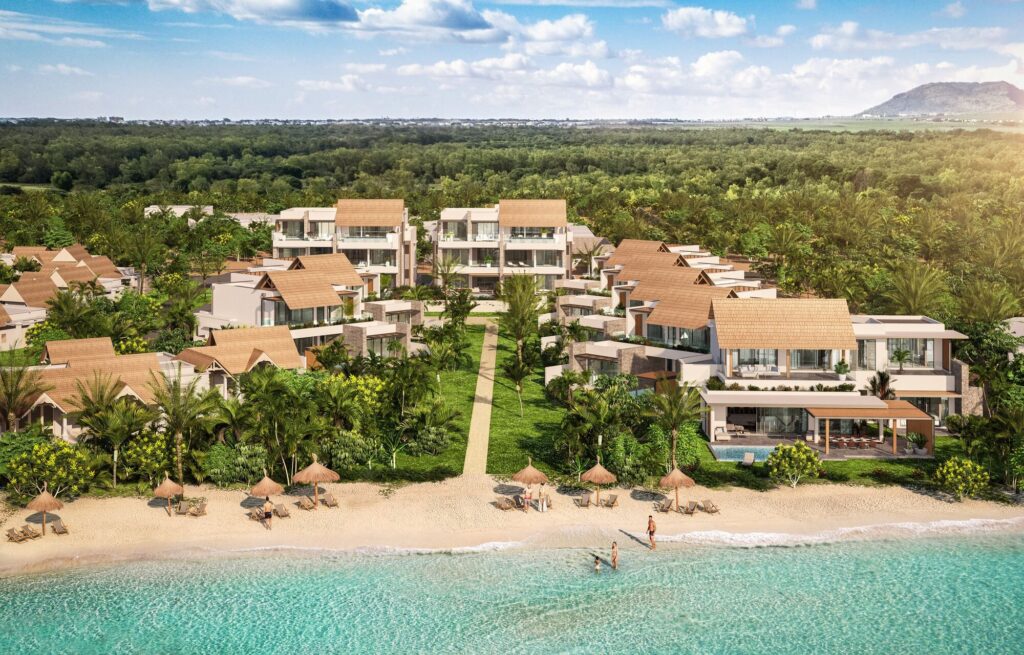
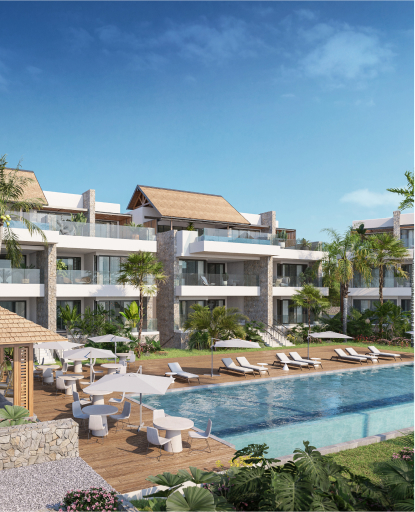
Investing in real estate through the PDS scheme (Property Development Scheme) or within a Smart City project is the fastest way to obtain a permanent residence permit in Mauritius. From USD 375,000, the buyer and their family may live in Mauritius without time limits, as long as they retain ownership of the property.
This status then allows you to satisfy the 183-day physical presence requirement over the year. Once this condition is fulfilled, you may qualify for long-term recognition as a tax resident in Mauritius.
How does MJ Développement help you obtain tax residency in Mauritius?
MJ Développement, a real estate developer, supports investors and expatriates with their relocation projects in Mauritius. Selection of properties eligible for residence permits, coordination of the requirements for tax residency in Mauritius, and connections with specialized tax advisors and lawyers: our team secures every stage of your tax transition so your project can move forward in full compliance.
Would you like to become a tax resident in Mauritius? Contact MJ Développement to discuss your plans and discover the real estate opportunities that qualify for a residence permit!
Sources :
- Mauritius Revenue Authority (MRA), Income Tax Act : https://www.mra.mu
- Convention fiscale franco-mauricienne du 11 décembre 1980, version consolidée : https://www.impots.gouv.fr/sites/default/files/media/10_conventions/ile_maurice/ile-maurice_convention-avec-l-ile-maurice_fd_1920.pdf
- Economic Development Board of Mauritius, permis de résidence : https://www.edbmauritius.org
- Cabinet AV2M Avocats, « Tour d’horizon de la fiscalité à l’île Maurice » : https://www.av2m-avocats.com/fr/tour-dhorizon-de-la-fiscalite-a-lile-maurice/