

Blended, fragrant, generous: Mauritius gastronomy tells the whole story of the island. In a single day, you can go from a dholl puri grabbed on a street corner to a Creole curry simmered in a family kitchen, with Chinese stir-fried noodles somewhere in between. Born from Indian, African, Chinese and French culinary traditions, Mauritian cuisine blends spices, tropical fruits, fish and market vegetables.
MJ Développement Mauritius shares with you a little guide to the dishes and flavours not to be missed during your stay on the island!
What you need to know
| What to know | In brief |
|---|---|
| Influences | Indian, Creole, Chinese and French |
| National dish | Dholl puri, a flatbread made with split yellow peas |
| Must-tries | Curry, rougaille, vindaye, briani, bol renversé |
| Street food | Gâteaux piments, samoussas, boulettes, mine frit |
| Where to taste | Port Louis market, tables d’hôtes, food courts |
A blended cuisine with a thousand influences
Mauritian cuisine is, above all, a story of cultural blending.
Over successive waves of migration, Indian, African, Chinese and French traditions came together to create a unique culinary culture, unlike anything else in the Indian Ocean.
From the Indian heritage come curries, spices, rice and dholl puri; from Africa and Madagascar, rougailles and chilli; from China, stir-fried noodles and bol renversé; from France, pastries and bread.
Mauritians also share this tradition with the sister island of Rodrigues, known for its free-range chicken, dried octopus (ourite) and vegetable achards. Today, the Mauritian table is a unique blend within the Indian Ocean, something Mauritians are deeply proud of.
This diversity shows up in every Mauritian dish, from breakfast to dinner, making every meal a little journey in itself!
The iconic dishes to try
You simply cannot leave the island without tasting its iconic dishes! This guide covers the must-haves. Mauritian cuisine is best enjoyed as a shared experience, centred around a few unmissable specialities:
- Dholl puri, a thin flatbread filled with split yellow peas, is the national dish and the star of street food.
- Available with chicken, fish or vegetables, Mauritian curry is fragrant with spices and often softened with a little coconut milk.
- Rougaille, a spiced tomato sauce with garlic and ginger, accompanies meat, fish or sausages.
- Served cold, vindaye is marinated fish pickled in mustard seeds and vinegar.
- Spiced rice cooked with meat or fish, Mauritian briani is the dish of choice for special occasions.
- With its rice, vegetables and egg, the bol renversé perfectly captures the island’s Chinese heritage.
- Cari d’ourite (octopus curry), slow-cooked in coconut milk, is the pride of tables on Rodrigues.
- Finally, mine frit, stir-fried noodles with vegetables, is an everyday classic.
Street food and Mauritian sweet treats
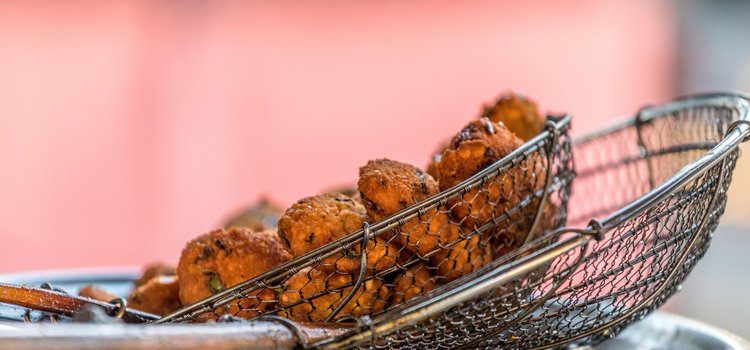
On the island of Mauritius, street food is part of everyday life and is enjoyed at any hour — at the market or by the roadside.
Here are the snacks and sweet treats not to be missed:
- Gâteaux piments, small spiced split pea fritters, are snacked on from the early morning.
- Crispy samoussas and boulettes (dumplings) are sold on every street corner.
- Farata, a flaky flatbread, accompanies a curry or is eaten on its own.
- Refreshing alouda blends milk, syrup and basil seeds — perfect in the heat.
- Tropical fruits — pineapple, mango or lychee — are enjoyed sprinkled with salt and chilli.
- To finish, gâteau patate (sweet potato cake) and napolitaine delight anyone with a sweet tooth.
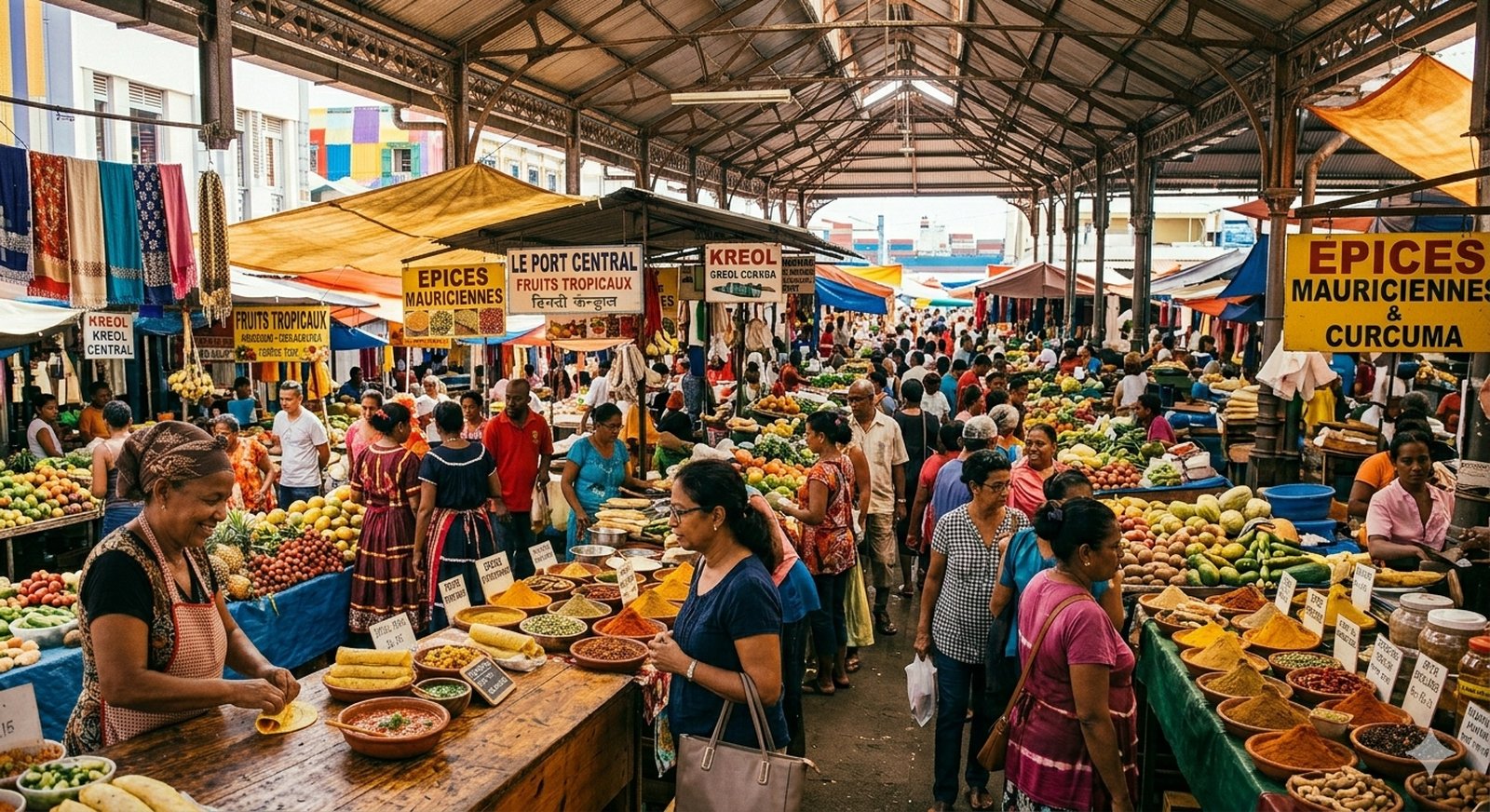
Good to know: the best dholl puri is not found in a restaurant, but at street stalls, where the queue is longest! At Port Louis, the central market is packed with stalls where you can enjoy gâteaux piments, samoussas and fresh fruit for just a few rupees. Follow the locals — these Mauritians who reinvent their recipes every day, creating new dishes all the time — it’s the guarantee of an authentic Mauritian cuisine experience!
Where to enjoy Mauritian cuisine?
Mauritian cuisine can be savoured everywhere, from street stalls to family tables. From region to region, every family reinvents the classics with their own spice blends, from chicken to sweet treats: a true invitation to travel, all the way around the ocean!
Markets, food courts and tables d’hôtes
To fully experience Mauritian gastronomy, nothing beats the popular spots!
Port Louis market and its food courts bring together a concentration of local flavours. Tables d’hôtes (home dining experiences), meanwhile, open the door to family cooking. At a local home, by reservation, these tables d’hôtes seat you at a home-cooked meal shared with a Mauritian family: this is often where you’ll find the most authentic dishes, far from tourist menus.
The tables at our resorts
No need to leave your accommodation to eat well: at our resorts, the table is part of the experience!
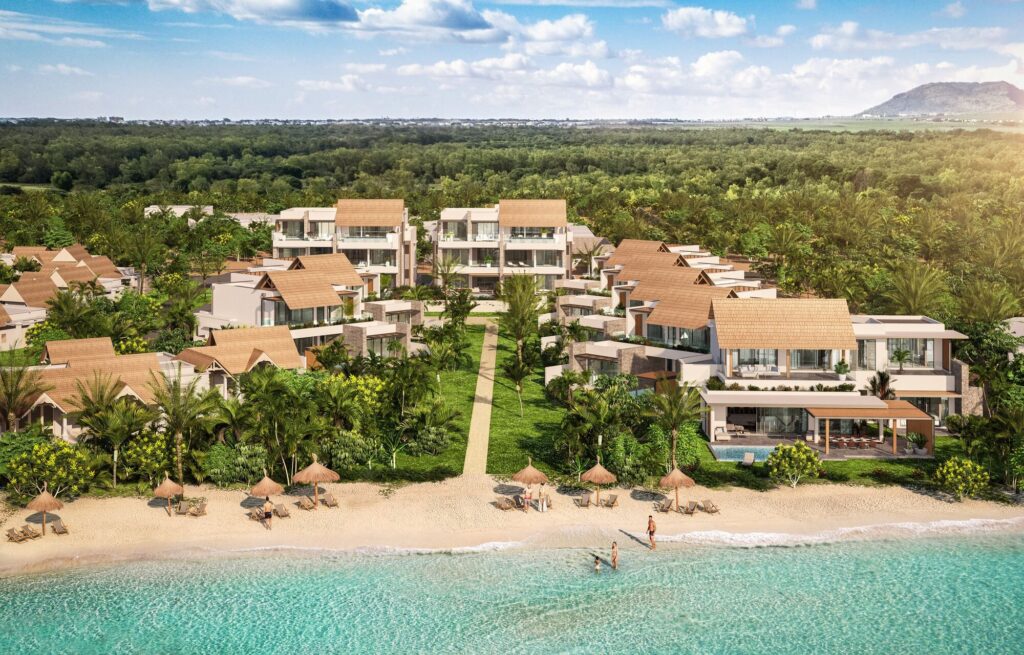
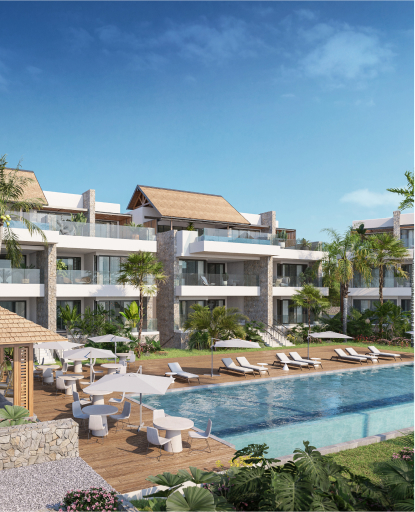
At Ekô Savannah, Boma restaurant — a restaurant in Tamarin — showcases wood-fire cooking and a local, inventive menu, in a convivial atmosphere enlivened by concerts and themed evenings. And for a dinner at home, our concierge team is happy to arrange a private chef or villa service, from breakfast to dinner.
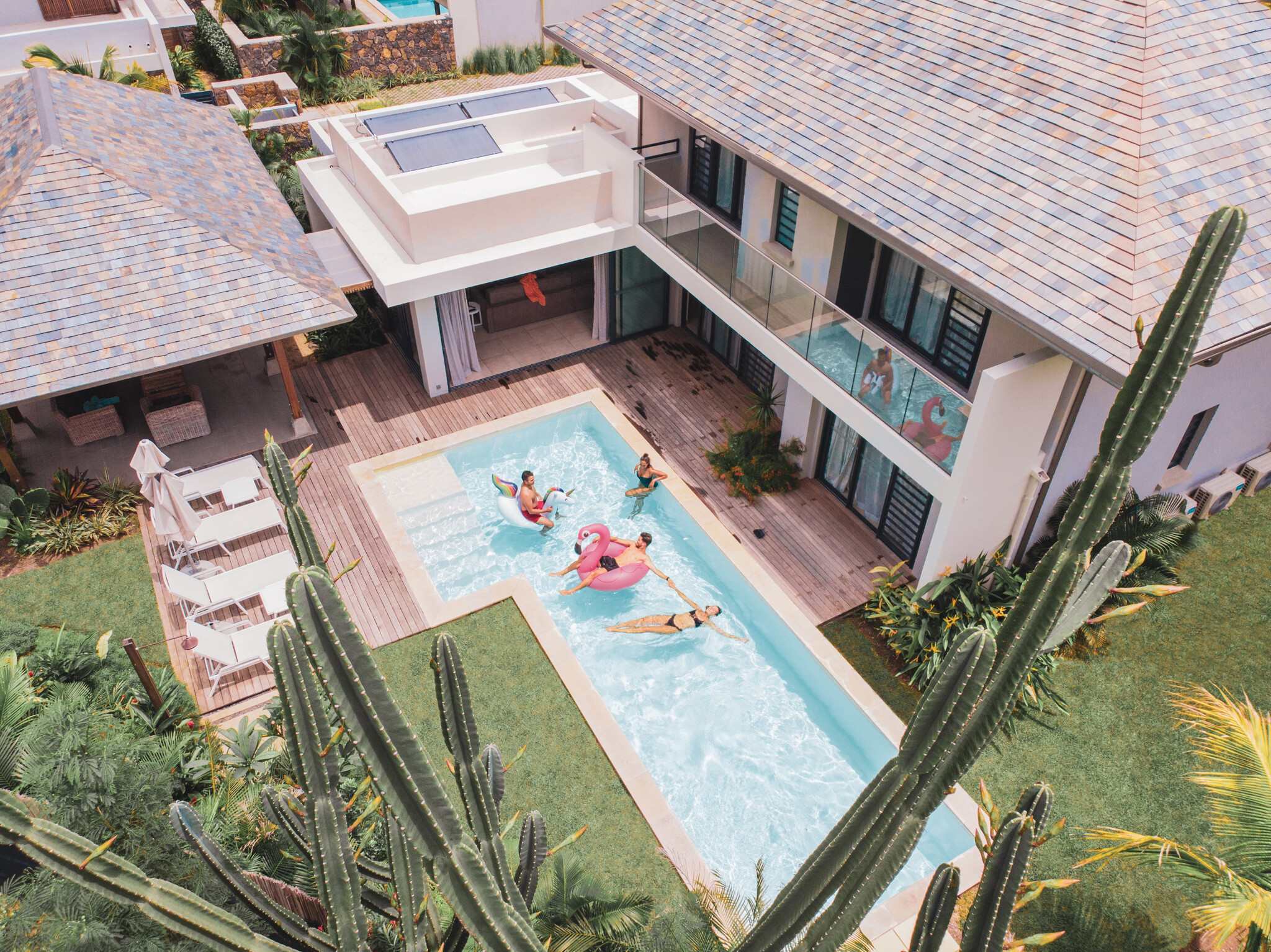
At Marguery Villas in Rivière Noire, dining is experienced in complete intimacy: à la carte dining and room service from breakfast to dinner, private chef, Creole dinner or villa barbecue, all orchestrated by the concierge.
As our team at MJ Développement puts it: “In Mauritius, the table is at the heart of the art of living: it is often over a shared curry that expats truly feel at home!“
Dreaming of enjoying this cuisine every day, not just on holiday? From discovering the island to settling down, the MJ Développement team, real estate developer in Mauritius, is here to help you make Mauritian gastronomy your new way of life. Let’s talk about your project to settle in Mauritius!
Our real estate programmes in Mauritius
FAQ — Gastronomy in Mauritius
What is the national dish of Mauritius?
The national dish of Mauritius is dholl puri, a thin flatbread filled with split yellow peas. Served with curry, rougaille and chilli, it is enjoyed all over the island, sold on the street for just a few rupees.
What are the influences behind Mauritian cuisine?
Mauritian cuisine brings together four main influences: Indian, African, Chinese and French. This cultural blending, born of successive waves of migration, explains the richness of spices, curries, noodles and pastries found at every meal.
What street food should I try in Mauritius?
For street food in Mauritius, try dholl puri, gâteaux piments, samoussas, boulettes and mine frit. These specialities are found at markets and along roadsides, often prepared in front of you for just a few rupees.
Is Mauritian food spicy?
Mauritian food is fragrant rather than overwhelmingly spicy: spices are plentiful, but chilli is usually served on the side. You adjust the heat level yourself, from the mildest curry to the spiciest chilli.
Where can I find authentic Mauritian cuisine?
For authentic Mauritian cuisine, head to markets such as Port Louis central market, street food stalls and tables d’hôtes. The tables at our resorts extend the experience with local produce, far from standardised tourist menus.
How much does a meal cost in Mauritius?
Eating in Mauritius is very affordable! Expect to pay just a few rupees for a street dholl puri, and between 250 and 500 rupees for a dish at a small local restaurant. Street food and tables d’hôtes offer the best value for money for travellers.